Quadruped & Animal Walk Cycle Animation Reference
Quadruped & Animal Walk Cycle Animation Reference is a professional animation reference guide for analyzing real-world biomechanics, timing arcs, and key poses. Four-legged locomotion involves complex lateral and diagonal footfall patterns. Compare canines, felines, and equines to animate believable quadruped weight and fluid spine mechanics.

Animals: Creature Animation & Running Locomotion (OP2 - Slam Dunk)
By Studio Reference
Study Quadruped & Animal Walk Cycle Animation Reference Clips
Click any clip to scrub frame by frame, loop contact phases, inspect balance arcs, and analyze organic timing.
Animals: Creature Animation & Running Locomotion (OP2 - Slam Dunk)

Animals: Character Acting & Creature Animation (BD - Kazutaka Ozaki)
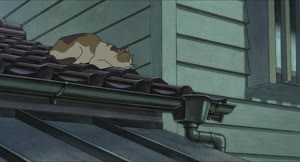
Animals: Character Acting & Creature Animation (BD - Crowd)

3d Background: Creature Animation & Running Locomotion (BD - Animals)

Animals: Creature Animation & Running Locomotion (R2JDVD - Junkers Come Here)
Animals: Character Acting & Creature Animation (BD - Crowd)

Animals: Creature Animation & VFX & Effects (NCED2 (Solo KA) (BD) - Flying)

Animals: Character Acting & Creature Animation (#45 (S2 #21) - Jujutsu Kaisen Season 2)

Animals: Character Acting & Creature Animation (ED - Cgi)

3d Background: Creature Animation & Cloth & Fabric (PV (BD) (AD: Ryo Imamura) - Animals)

3d Background: Character Acting & Creature Animation (NCOP (Solo KA) (BD) - Animals)

Animals: Character Acting & Creature Animation (#51 (S3 #04) - Jujutsu Kaisen Season 3)
Anatomical & Kinetic Breakdown
Master the Core Mechanics
Footfall Sequence in Quadruped Walks
Standard quadruped walking follows a four-beat rhythm: Left Hind, Left Front, Right Hind, Right Front. The spine arches and undulates as weight transfers from the hindquarters to the shoulders.
Carnivore vs. Herbivore Paws and Hooves
Felines walk digitigrade with flexible paw pads and loose scapula action. Ungulates (horses, deer) walk unguligrade with rigid leg columns and high springing joints.
24 FPS Frame Timing & Cadence
At standard 24 frames per second cinematic cadence, two complete steps take exactly 24 frames (12 frames per single stride). Fast brisk walks tighten to 16-18 frames, while a heavy character or leisurely stroll extends to 28-32 frames. Ensure the contact frame occurs on frames 1 and 13, down impact on frames 4 and 16, passing pose on frames 7 and 19, and the apex up position on frames 10 and 22. Deviating slightly in spacing rather than timing prevents mechanical rigidity while maintaining clear rhythmic tempo.
Pelvic Balance & Center of Gravity Displacement
Weight is communicated primarily through vertical and lateral pelvic translation. As the contact foot absorbs downward inertia, the pelvis drops to its lowest elevation and tilts downward toward the unsupported side. Meanwhile, the thoracic spine counter-flexes laterally to keep the head aligned over the center of balance. Failing to animate this counter-balancing clavicle tilt is the most common reason walk cycles look stiff, floating, or disjointed in 3D game engines.
Common Animator Pitfalls to Avoid
Avoid linear translation curves on the root bone in 3D rigs; human hips decelerate as they rise toward the up pose and accelerate into the down pose. In 2D hand-drawn animation, ensure that the foot roll stays planted without phantom slipping on the contact frames. Always trace the heel and toe arcs: the foot should lift with a smooth parabolic trajectory rather than snapping abruptly into the passing phase.
How to Study This Reference Like a Pro
Step frame by frame and pinpoint the exact contact and reversal frames. Trace the pelvis and spine line of action first before keying the limbs. Exaggerate the arcs and preserve volume.
Study Related Reference Tags
Jump into dedicated tag feeds with thousands of community, studio, and production references.
Related Animation Guides
Frequently Asked Questions
Q.What is the most common mistake in animal walk cycles?
Treating the animal like two human walks stuck together. The front and rear leg pairs must synchronize with spinal flexion and scapular sliding.
Q.How should an animator study Quadruped & Animal Walk Cycle Animation Reference frame by frame?
Step through the footage using arrow keys to pinpoint contact and reversal frames. Map out the line of action and pelvis trajectory first before keyframing limb details, and test your timing with side-by-side playblast comparison.