Squash & Stretch Animation Reference & Examples
Squash and stretch breathes life, elasticity, and visceral weight into objects and characters. The golden rule is volume preservation: as an object squashes wider, it must decrease in height proportionally.
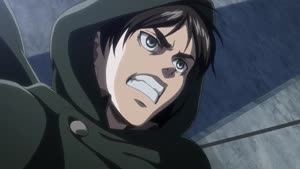
3d Background: VFX & Effects & Impact Frames (#50 (BD) (S3 #13) - Cgi)
By Studio Reference
Study Squash & Stretch Animation Reference & Examples Clips
Click any clip to scrub frame by frame, loop contact phases, inspect balance arcs, and analyze organic timing.
3d Background: VFX & Effects & Impact Frames (#50 (BD) (S3 #13) - Cgi)

Beams: VFX & Effects & Impact Frames (#191 - Dragon Ball Series)

Ice: VFX & Effects & Impact Frames (#08 - Kekkai Sensen)

3d Background: VFX & Effects & Impact Frames (#04 - Cgi)

Beams: VFX & Effects & Impact Frames (#12 (BD) - Kai Ikarashi)

3d Background: VFX & Effects & Impact Frames (#11 - Black And White)

3d Background: VFX & Effects & Impact Frames (NCOP - Boya Liang)

Henshin: VFX & Effects & Impact Frames (#02 (BD) + #07 - Senki Zesshou Symphogear Series)

Kanada Light Flare: Character Acting & Impact Frames (#10 - Mecha)

Flcl: Character Acting & Impact Frames (#05 (AD: Hiroyuki Imaishi) - Flcl Series)

Gridman: Character Acting & Impact Frames (#10 (SB/AD: Kai Ikarashi) - Kai Ikarashi)

Akira Hamaguchi: VFX & Effects & Impact Frames (NCOP1 - Black And White)
Anatomical & Kinetic Breakdown
Master the Core Mechanics
Volume Preservation is Key
Whether animating a bouncing ball, a character taking a punch, or an expressive facial take, if volume expands or shrinks arbitrarily, the animation looks rubbery and disconnected from reality.
Subtle vs. Cartoon Squash
Realistic human animation uses subtle flesh compression—in cheek pads during speech, thigh muscles on landing impact, and foot arches. Cartoon animation exaggerates these forces across entire character frames.
24 FPS Frame Timing & Cadence
At standard 24 frames per second cinematic cadence, two complete steps take exactly 24 frames (12 frames per single stride). Fast brisk walks tighten to 16-18 frames, while a heavy character or leisurely stroll extends to 28-32 frames. Ensure the contact frame occurs on frames 1 and 13, down impact on frames 4 and 16, passing pose on frames 7 and 19, and the apex up position on frames 10 and 22. Deviating slightly in spacing rather than timing prevents mechanical rigidity while maintaining clear rhythmic tempo.
Common Animator Pitfalls to Avoid
Avoid linear translation curves on the root bone in 3D rigs; human hips decelerate as they rise toward the up pose and accelerate into the down pose. In 2D hand-drawn animation, ensure that the foot roll stays planted without phantom slipping on the contact frames. Always trace the heel and toe arcs: the foot should lift with a smooth parabolic trajectory rather than snapping abruptly into the passing phase.
How to Study This Reference Like a Pro
Step frame by frame and pinpoint the exact contact and reversal frames. Trace the pelvis and spine line of action first before keying the limbs. Exaggerate the arcs and preserve volume.
Study Related Reference Tags
Jump into dedicated tag feeds with thousands of community, studio, and production references.
Related Animation Guides
Frequently Asked Questions
Q.Why is squash and stretch considered the most important principle?
Because it immediately breaks the illusion of rigid computer geometry and conveys physical mass, flexibility, fleshiness, and force.
Q.How should an animator study Squash & Stretch Animation Reference & Examples frame by frame?
Step through the footage using arrow keys to pinpoint contact and reversal frames. Map out the line of action and pelvis trajectory first before keyframing limb details, and test your timing with side-by-side playblast comparison.